

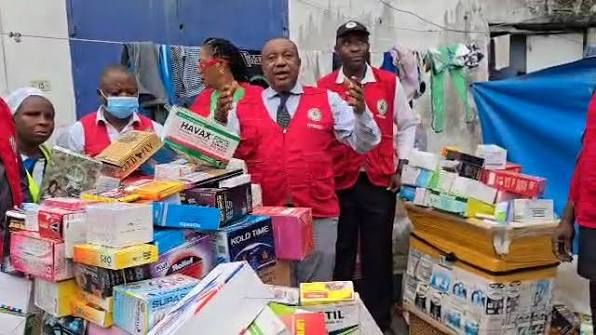
NAFDAC Begins Nationwide Enforcement Against Banned Sachet Alcohol
The National Agency for Food and Drug Administration and Control (NAFDAC) has started a nationwide enforcement campaign to remove banned alcoholic beverages packaged in sachets and polyethylene terephthalate (PET) bottles smaller than 200 millilitres from circulation across Nigeria.
The operation, which is being carried out in all six geopolitical zones, represents the full enforcement of the Federal Government’s directive restricting the production, distribution, and sale of these products. The agency says the exercise is aimed at protecting public health, especially among children and young people who are more likely to access low-cost alcoholic beverages.
Nationwide Enforcement Underway
NAFDAC officials have been deployed to major markets, supermarkets, bars, retail shops, motor parks, warehouses, and other distribution points across the country. Their responsibility is to identify and confiscate alcoholic beverages that fall under the banned packaging category.
According to the agency, the enforcement follows earlier regulatory directives and the shutdown of manufacturing facilities that failed to comply with the government’s policy.
Businesses found producing, importing, transporting, distributing, stocking, or selling the prohibited products may face legal action in addition to the seizure of their goods.
Manufacturers and Distributors Warned
NAFDAC’s Director-General, Professor Mojisola Christianah Adeyeye, stated that manufacturers, importers, wholesalers, distributors, retailers, transporters, and street vendors are expected to immediately surrender any remaining stock of the prohibited alcoholic beverages.
The agency warned that anyone who continues to keep or sell the banned products risks regulatory sanctions, confiscation of goods, and possible prosecution under existing laws.
Why the Government Is Enforcing the Ban
NAFDAC explained that the enforcement is part of broader efforts to reduce underage drinking, discourage substance abuse, and limit the easy availability of inexpensive alcoholic beverages.
Health experts have consistently raised concerns that alcohol packaged in very small quantities makes it easier for minors and vulnerable individuals to obtain alcoholic drinks at low prices. By removing these products from the market, authorities hope to encourage more responsible alcohol consumption while strengthening public health protection.
Enforcement Focuses on Non-Compliant Products
The regulatory agency clarified that the operation is directed only at products that violate approved packaging standards. Manufacturers who comply with the established regulations are not the target of the exercise.
Officials emphasized that sachet alcoholic drinks and PET bottles below 200ml are no longer permitted for sale and should not be found in the Nigerian market.
Public Asked to Support the Exercise
NAFDAC has appealed to Nigerians to cooperate with the ongoing enforcement by reporting individuals or businesses involved in the production, storage, transportation, or sale of prohibited alcoholic beverages.
The agency also advised consumers to avoid purchasing any alcoholic drinks packaged in sachets or PET bottles below the approved size and to report suspected violations to the nearest NAFDAC office.
Authorities noted that the exercise will continue across the country as part of a long-term strategy to improve public safety and strengthen compliance with national regulations governing alcoholic beverages.
Frequently Asked Questions
Why did NAFDAC ban sachet alcohol?
The ban aims to reduce underage drinking, discourage substance abuse, and improve public health by limiting access to inexpensive alcoholic beverages.
What products are affected?
Alcoholic beverages packaged in sachets and PET bottles smaller than 200ml are prohibited under the current enforcement.
What happens to offenders?
Anyone found producing, importing, transporting, distributing, storing, or selling the banned products may have their goods confiscated and could face prosecution.
About The Author
